The Word Natural Does Not Explain a Whole Product
Natural food claims can sound reassuring, but they leave key details unanswered. Read the ingredient list, processing cues and other label information.
The most common mistake with a natural food claim is treating it as a verdict on the whole product. It costs you useful detail: the word may not tell you what is inside, how it was made, or whether it suits your needs. A natural food claim is a starting point for questions, not a complete description.
A reassuring word can cover several different ideas
On a packet, “natural” might suggest familiar ingredients, minimal processing, a connection to farming, or simply a pleasant impression. Those are not interchangeable claims. A buyer who reads the word as meaning “made only from ingredients I recognise” may be left guessing if the pack gives no clear explanation of what the producer means.
Look at the wording around the claim. “Made with natural flavours”, for instance, speaks about a particular component, not necessarily the rest of the recipe. A front-of-pack phrase can be prominent while the product contains other ingredients, additives or processing aids that the phrase does not describe. The detail, if provided, belongs elsewhere on the pack.
Rules for food claims differ by place and product, so the word’s precise meaning can depend on local requirements. For a decision about a particular claim, check the relevant food authority’s guidance; do not assume that one definition applies everywhere.
Read the claim as narrowly as it is written
Marketing language often makes a small claim feel like a large one. “Natural source of…” identifies a stated source or feature; it does not automatically describe every part of the food. “Naturally flavoured” tells you something about flavouring, but not whether the food is sweet, salty, allergen-free or minimally processed.
Try mentally adding “the wording says” before the claim. “The wording says this product is made with natural ingredients” is more precise than “this product is natural”. That small change keeps the claim in its lane and makes it easier to notice what has not been said.
Claims can also sit beside images of fields, fruit or wooden bowls. Those pictures may shape an impression, but they are not an ingredient list or a process description. Let the written particulars carry more weight than the scenery.
Check the parts the headline leaves out
Use this short checklist when a natural claim catches your eye. It is not a scorecard; it is a way to identify which facts are available and which remain unclear.
- Find the exact wording. Does “natural” describe the whole food, a flavour, a colour, or one named ingredient? Keep your conclusion no broader than the phrase.
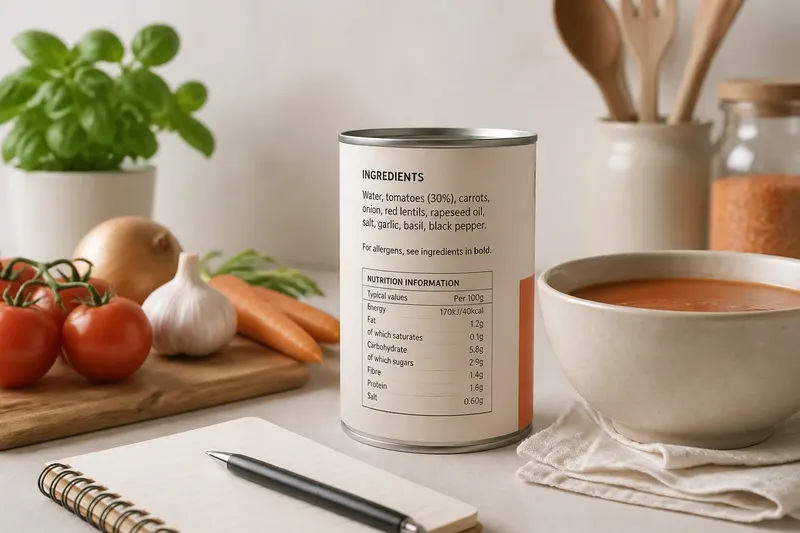
- Read the ingredient list. Notice named ingredients, compound ingredients and any terms you want to look up. Familiarity alone does not establish nutritional value or suitability.
- Look for a process description. Words such as dried, fermented, smoked or concentrated can tell you something concrete about what happened to the food. A natural claim by itself cannot fill in those steps.
- Check the information that matters to you. If you are choosing for an allergy, dietary need or other health concern, use the relevant allergen and nutrition information rather than relying on a general marketing term.
- Notice the scope of any supporting claim. A statement about one ingredient, flavour or production method should not be taken as a promise about every feature of the pack.
- Ask what remains unanswered. If the pack does not explain a feature you care about, treat it as unknown rather than supplying a favourable assumption.
Processing is not a simple natural-or-not divide
Processing includes ordinary actions such as chopping, freezing, cooking, drying and fermenting. A food can undergo one or more of these and still be made from recognisable ingredients. Conversely, a product with a natural-sounding claim may leave the processing details vague.
That is why “natural” and “processed” do not work as neat opposites. The useful question is more specific: which process matters to your choice, and does the pack give you information about it? If you are interested in fermentation, for example, look for a direct description of fermentation rather than inferring it from a rustic design or a general claim.
Processing can affect texture, flavour, convenience and how a food is used. It does not, by itself, settle whether a product is a good fit for your meals. Consider the ingredient information and the role you expect the food to play.
Use the rest of the label for the decision at hand
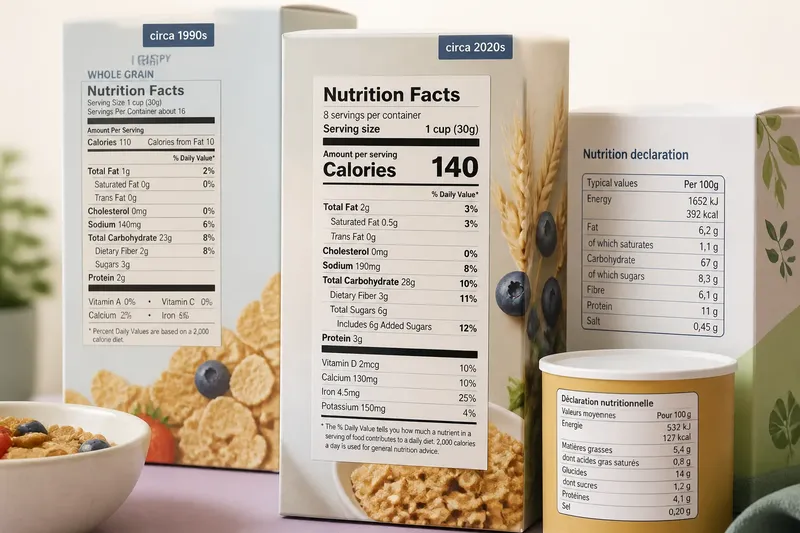
Different questions call for different label details. For a food allergy, the allergen declaration is more relevant than “natural”. For a dietary pattern, inspect ingredients and any applicable dietary marking. If you are comparing sweetness or saltiness, the nutrition panel is the place to check the information provided for those nutrients.
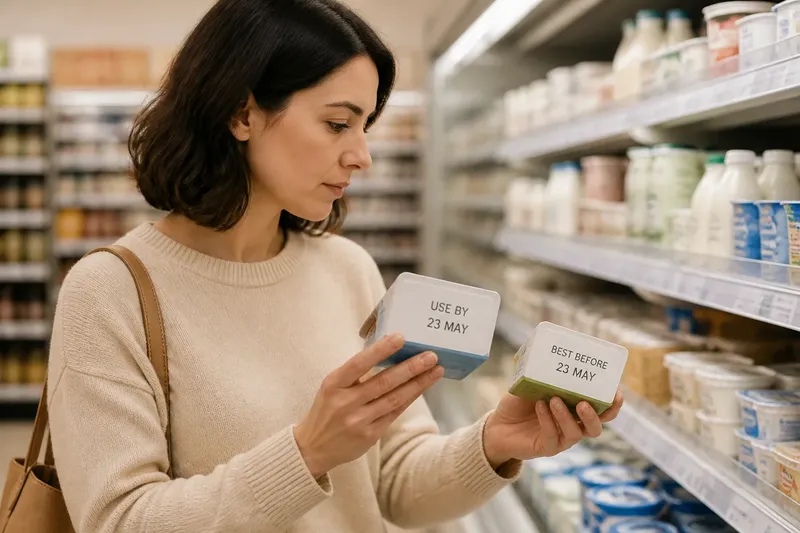
Packaging can also explain storage, preparation and serving suggestions. These details may matter more than a broad claim if you want to know how to handle the product or whether it fits a particular meal. Use each part of the label for the question it can actually answer.
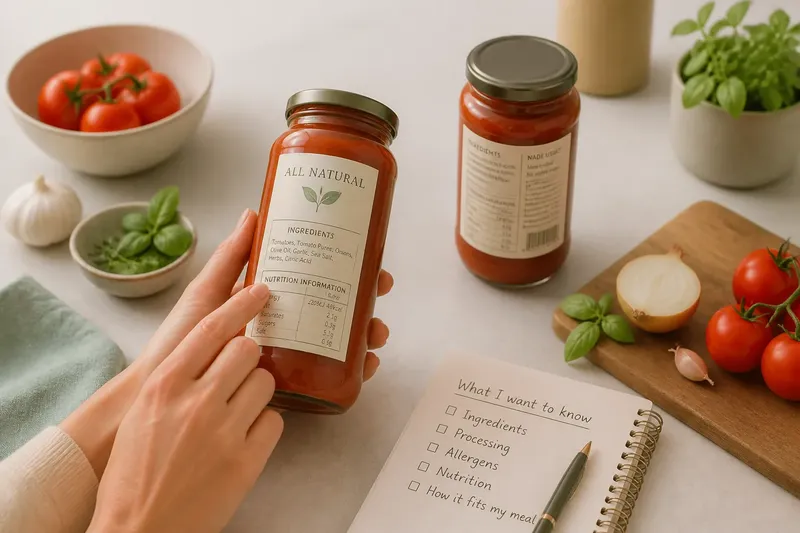
Say you are choosing between two jars of pasta sauce and one says “all natural”. You could check both ingredient lists for the items you care about, read the nutrition panels if sweetness or salt is a concern, and look for any stated production details. The observable result is a clearer account of the differences the packs disclose; the phrase alone still cannot tell you which jar is right for your meal.
What does natural mean on a food label?
Does natural mean a food is unprocessed?
No. The word alone does not describe every process used to make a food. Check for specific process information if that is part of your decision.
Does a natural claim mean a product is healthier?
Not by itself. Use the ingredient list and nutrition information to assess the features relevant to your own needs.
Can natural describe only one ingredient?
Yes, wording may refer to a particular flavour, ingredient or component rather than the entire product. Read the complete phrase and check what it actually names.
What should I do if the claim is unclear?
Rely on the specific information printed elsewhere on the pack, and leave unsupported details open. If the claim affects a health or allergy decision, seek advice from a qualified professional or the appropriate food authority.
Let specific information carry the weight
Natural food claims are easiest to read when you treat them as one small piece of evidence about how a product is presented. Check the exact wording, then turn to ingredients, process descriptions and the label details tied to your question. That approach gives the natural food claim its proper scale: potentially informative, but never a substitute for the rest of the pack.